Enterprise Resource Planning (ERP) systems form the operational backbone of modern organizations, consolidating critical business functions into unified platforms. ERP hosting has evolved from on-premise infrastructure to cloud-based solutions. For organizations seeking operational efficiency, business continuity, and reduced capital expenditure, ERP hosting represents a strategic evolution in how enterprises manage resources.
ERP hosting refers to cloud-based or managed infrastructure specifically designed to run ERP systems reliably, securely, and at scale. Rather than purchasing expensive servers, hiring IT staff to maintain hardware, and managing security protocols internally, organizations increasingly leverage ERP cloud hosting to focus entirely on business operations.
What is ERP Hosting?
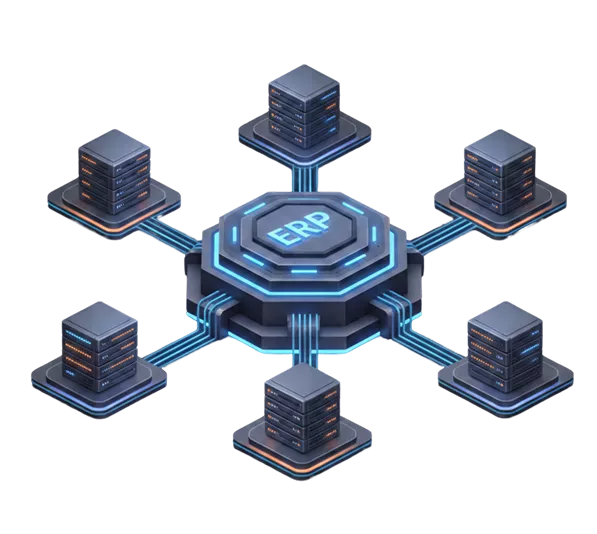
ERP hosting involves deploying Enterprise Resource Planning systems on dedicated cloud infrastructure. ERP systems integrate critical business functions—accounting, human resources, supply chain, inventory, manufacturing—into unified platforms providing real-time visibility into operations.
Cloud ERP Hosting means providers maintain the infrastructure, security, backup systems, and disaster recovery. Organizations access ERP systems through web browsers or clients without managing underlying hardware or software updates.
Managed ERP Hosting Services extend beyond infrastructure to include professional monitoring, optimization, security management, and expert support. Providers ensure ERP systems perform optimally while organizations focus on business strategy.
Private Cloud ERP Hosting provides dedicated infrastructure for single organizations.
Types of ERP Hosting Solutions
Sage ERP Hosting specifically supports Sage ERP platforms, optimized for manufacturing and distribution businesses requiring specialized financial management capabilities.
Epicor ERP Cloud Hosting provides infrastructure purpose-built for Epicor ERP systems, enabling businesses to leverage Epicor’s manufacturing, distribution, and service management capabilities without infrastructure investment.
Custom ERP Hosting accommodates proprietary or specialized ERP systems.
Core Benefits of ERP Hosting
Operational Efficiency – Eliminate server maintenance, security patches, and hardware upgrades. Providers handle all technical operations while organizations focus on business processes.
Business Continuity – Professional ERP hosting includes disaster recovery, backup systems, and redundant infrastructure. This ensures continuous operations even during incidents. Recovery time objective (RTO) measured in minutes instead of hours.
Predictable Costs – Fixed monthly ERP hosting fees eliminate unpredictable capital expenses for hardware, software licensing, and IT staffing.
Scalability – ERP cloud hosting scales effortlessly as businesses grow. Additional users, modules, or capacity requires configuration changes, not hardware purchases.
Security and Compliance – Professional ERP hosting services include managed firewalls, identity management, encryption, and compliance certifications (SOC 2, HIPAA) that most small-to-medium businesses cannot implement independently.
24/7 Support – ERP hosting with 24/7 support ensures expert assistance whenever issues arise. Many organizations cannot afford dedicated internal ERP expertise.
ERP Hosting Comparison: Cloud vs. On-Premise
Aspect
Cloud ERP Hosting
On-Premise
Capital Investment
Minimal
Significant (servers, software)
Ongoing Costs
Predictable monthly
Variable (upgrades, repairs, staffing)
Maintenance Burden
Provider responsibility
Internal IT staff
Scalability
Simple and automatic
Complex and expensive
Disaster Recovery
Professional-grade
Often inadequate
Security Management
Expert managed
Dependent on internal capability
Remote Access
Native capability
Requires VPN configuration
Compliance
Built-in certifications
Customized implementation
Selecting ERP Hosting Providers
When evaluating ERP hosting options, organizations should assess provider experience with their specific ERP system (whether Sage ERP hosting, Epicor ERP cloud hosting, or custom systems), support responsiveness, backup and disaster recovery capabilities, security certifications, and pricing transparency.
Quality ERP managed hosting services should provide dedicated support teams understanding both ERP systems and business operations. Avoid providers offering only infrastructure without ERP-specific expertise. Request references from existing customers and verify disaster recovery playbooks actually work through regular testing.
Implementation Considerations
Successful ERP hosting migration requires careful planning. Coordinate with providers on data migration, user access configuration, integration with other business systems, and training timelines. Establish clear performance baselines and monitoring expectations. Document processes and escalation procedures for issue resolution.
FAQ
Cloud ERP hosting eliminates server maintenance and capital expenses. Providers manage infrastructure, security, backups, and updates while organizations access systems via web browsers. On-premise requires purchasing hardware, hiring IT staff, and managing everything internally.
Professional ERP cloud hosting includes encryption, firewall management, identity controls, regular security audits, and compliance certifications. Most cloud providers implement more robust security than small businesses can afford internally.
Yes. ERP cloud hosting supports customization, reporting modifications, and workflow adjustments. Cloud doesn’t mean less flexibility—it means providers handle infrastructure while organizations customize functionality.
Quality ERP hosting with 24/7 support ensures providers maintain multiple redundant internet connections. If primary connection fails, systems continue operating on backup connectivity. However, users without internet cannot access cloud-hosted systems.
Professional disaster recovery includes backup systems in geographically separate locations, tested recovery procedures, and recovery time objectives measured in minutes. EstesGroup, for example, provides recovery in approximately 10 seconds.
Contact us
Fill out the form or write in the online chat in the bottom right corner, and our manager will contact you shortly
We use cookies to improve your website experience and analyze traffic. You can adjust your preferences below. Some cookies are essential for the website to work and are always active. Others help us improve how the site works or deliver content that's more relevant to you — but only with your consent. You're in control. Choose what you'd like to enable:
Necessary
Always Active
These cookies keep the site running properly — like secure logins and page navigation. They don't store any personal data.
Functional
Let you share content on social media, submit feedback, or use third-party tools.
Analytics
Help us learn how people use our site so we can make it better and easier to use.
Advertising
Let us show you more relevant ads and track how effective our campaigns are.